Lagoa Amélia Hike: Into The Rainforest Above São Tomé
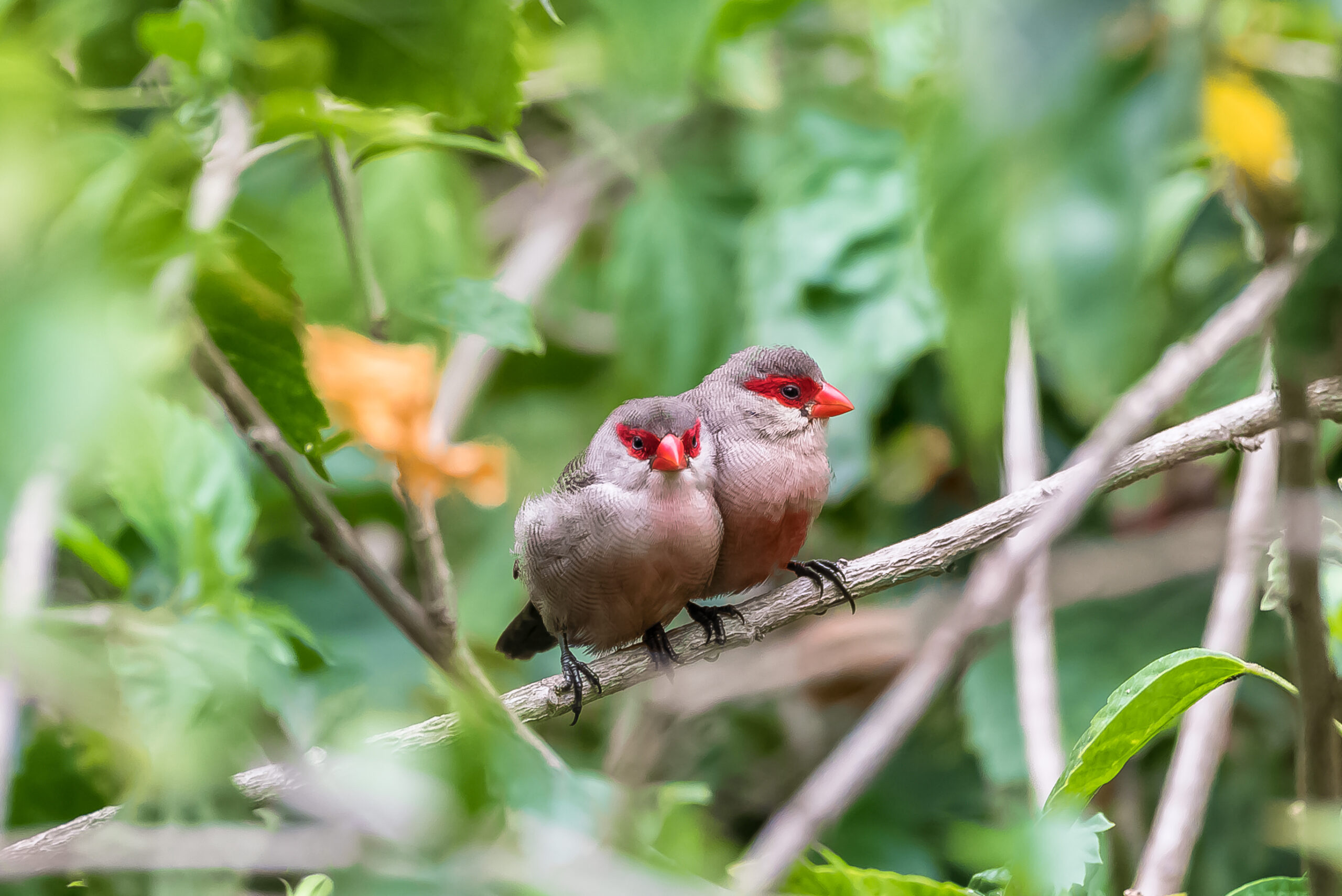
Leaving São Tomé city behind, the road to the Lagoa Amélia hike rises almost without announcement. There is no defined moment where the landscape shifts, no sharp turn or marked ascent, only a gradual lifting away from the coast, as though the island is quietly drawing you inward.
Driving Into São Tomé Interior Rainforest
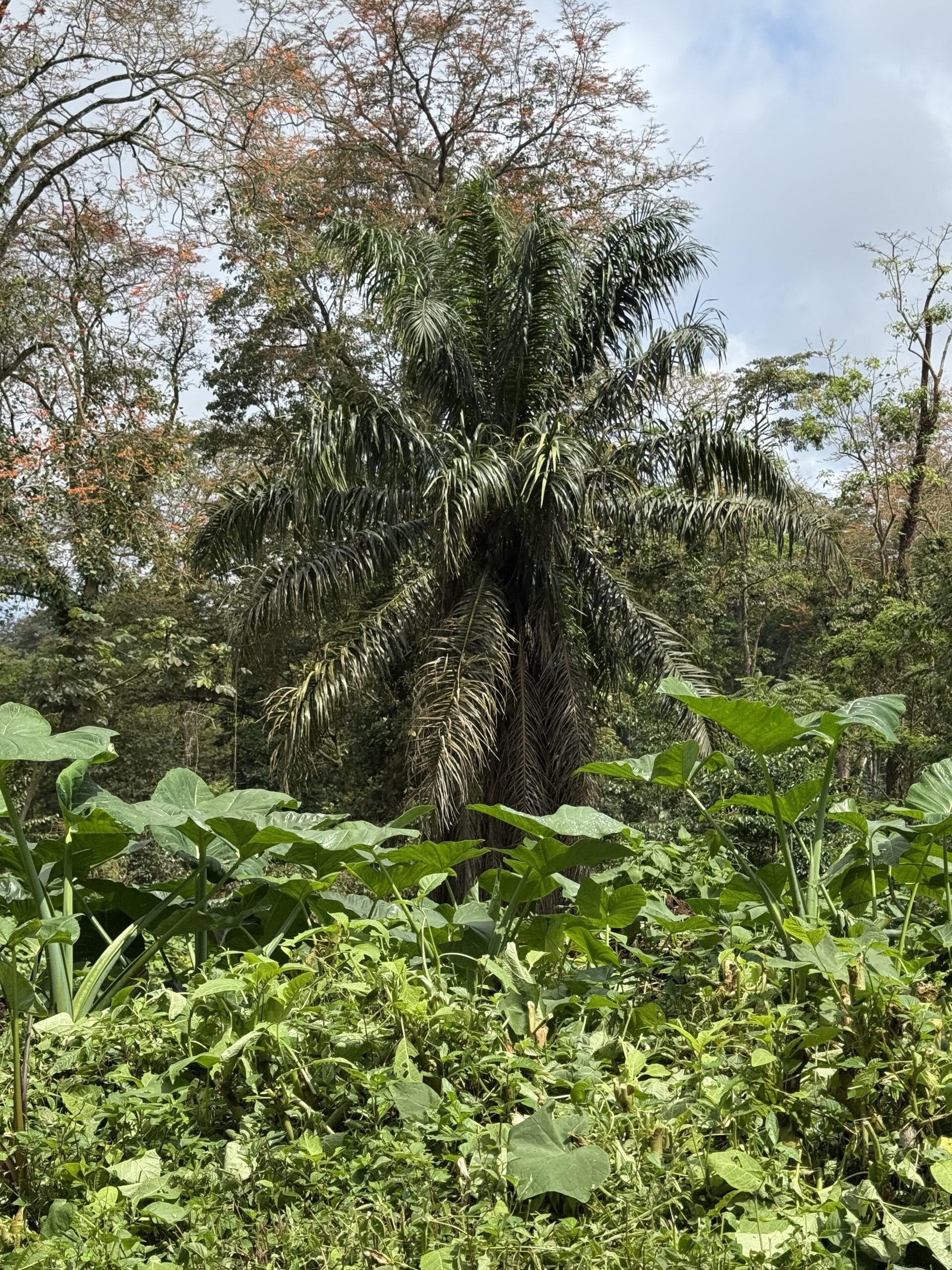
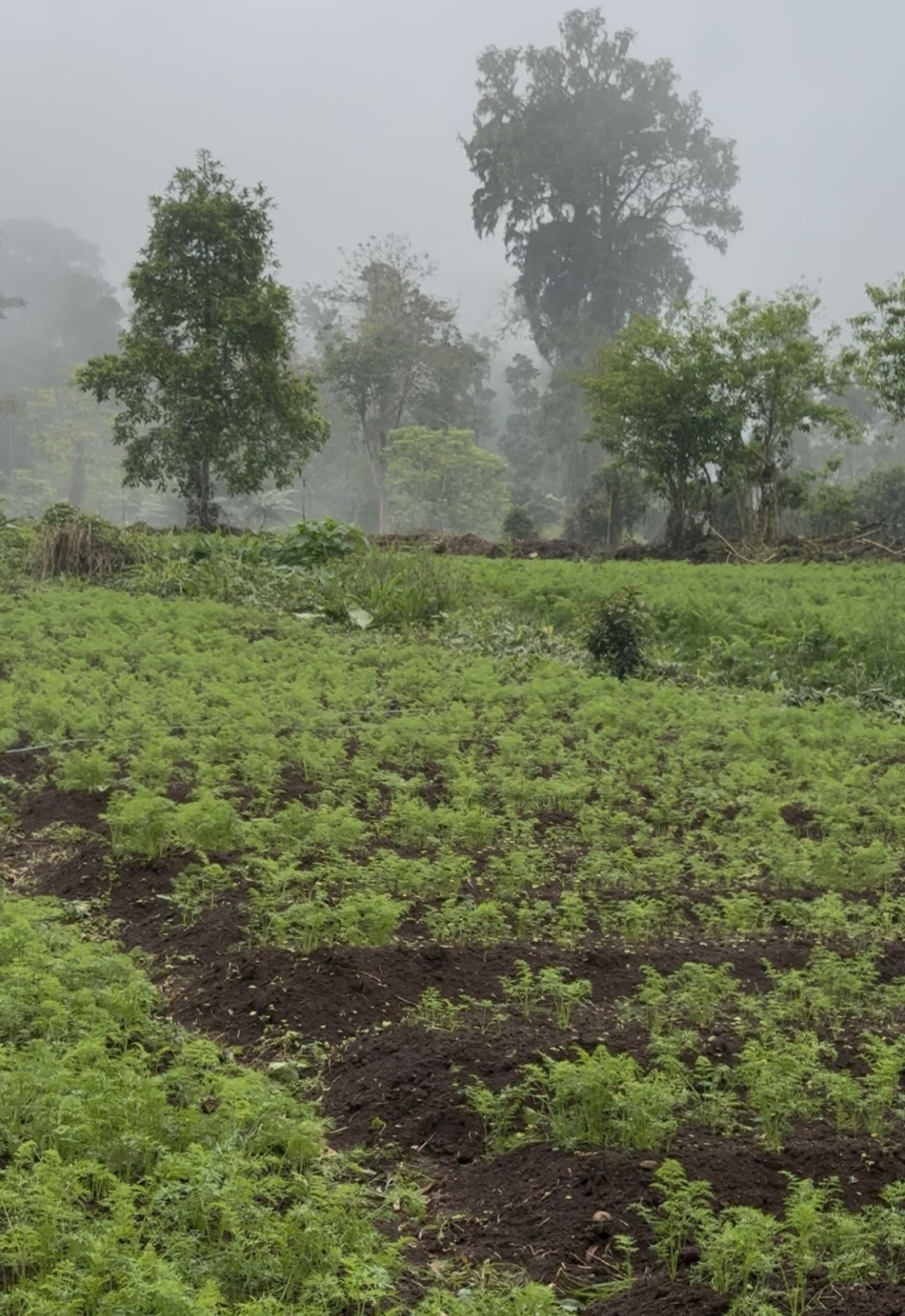
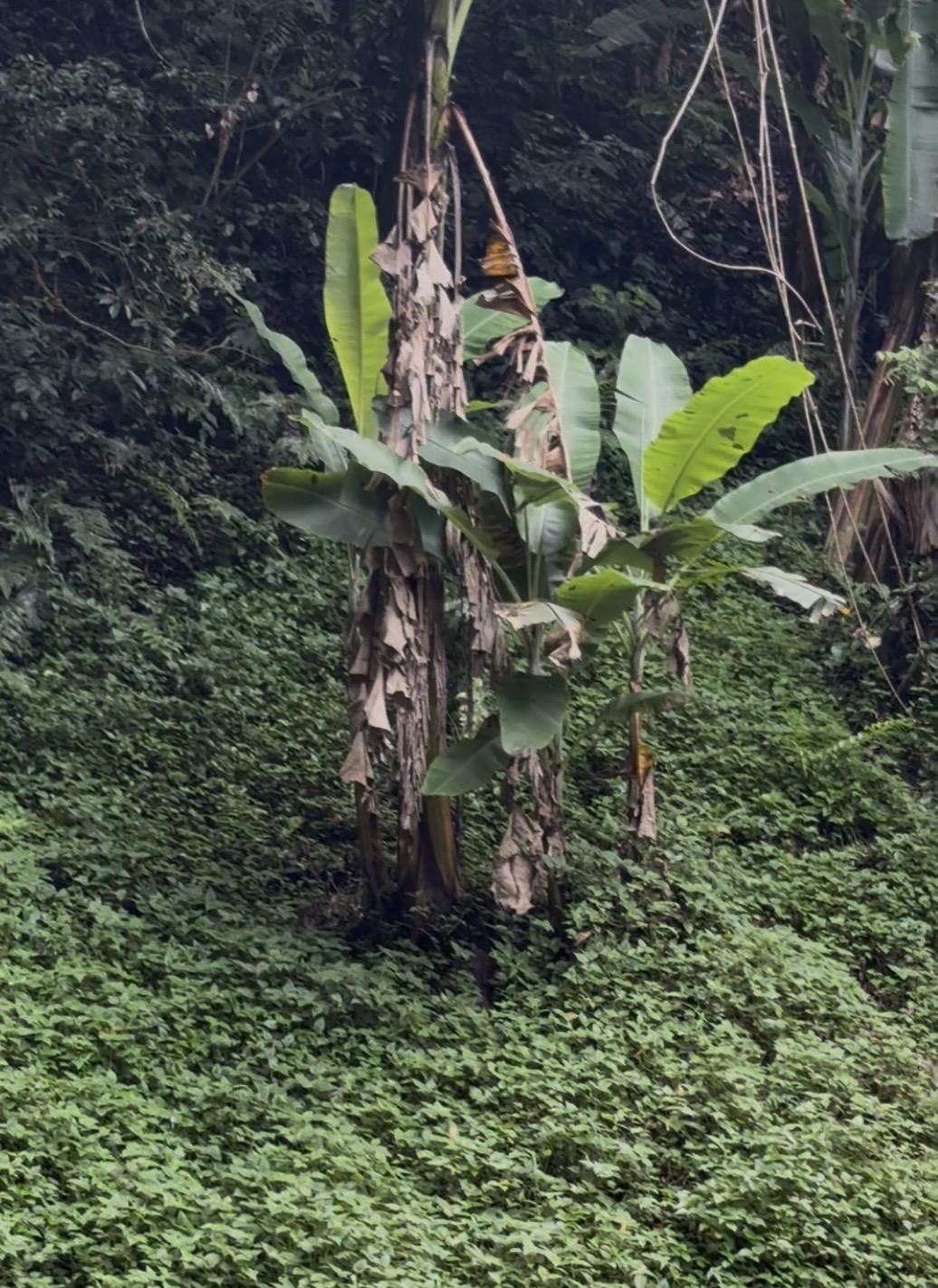
The road out of the city is calm, almost understated in its transition. For a while, it feels unchanged, the same rhythm of movement, the same sense of ease. But gradually, without forcing your attention, the landscape begins to speak differently. Small agricultural plots line the route. Not in rows designed for presentation, but in fragments of land shaped by use and necessity. Bananas, plantain, coffee, root vegetables, everything growing in proximity, layered and practical.
There is nothing ornamental about it. This is working land. Land that feeds, supports, and sustains. It is not curated for visitors, you are not passing through a staged version of rural life; you are witnessing something continuous and real.
As the elevation builds, the shift becomes more tangible. The air carries moisture. The vegetation thickens. Light softens as the canopy begins to gather above the road.By the time you reach the trailhead near Obô Natural Park, the atmosphere has already changed. There is a quiet heaviness, mist suspended in the air, not quite rain, not quite cloud. It settles gently on the skin, a reminder that you are no longer at sea level. Stepping out of your vehicle the silence is immediate.
The Lagoa Amélia Hike Through Obô Natural Park
The Lagoa Amélia hike does not begin with intensity, but with a slow, deliberate introduction to the landscape no drama. My guide parked just outside the Obô Natural Park visitor centre. We checked to make sure we had our basics water, rain protection, bug repellent and off we went! There is no steep opening climb, no immediate test of endurance. Instead, the path introduces itself slowly, a steady incline that allows your body to adjust before asking more of it.
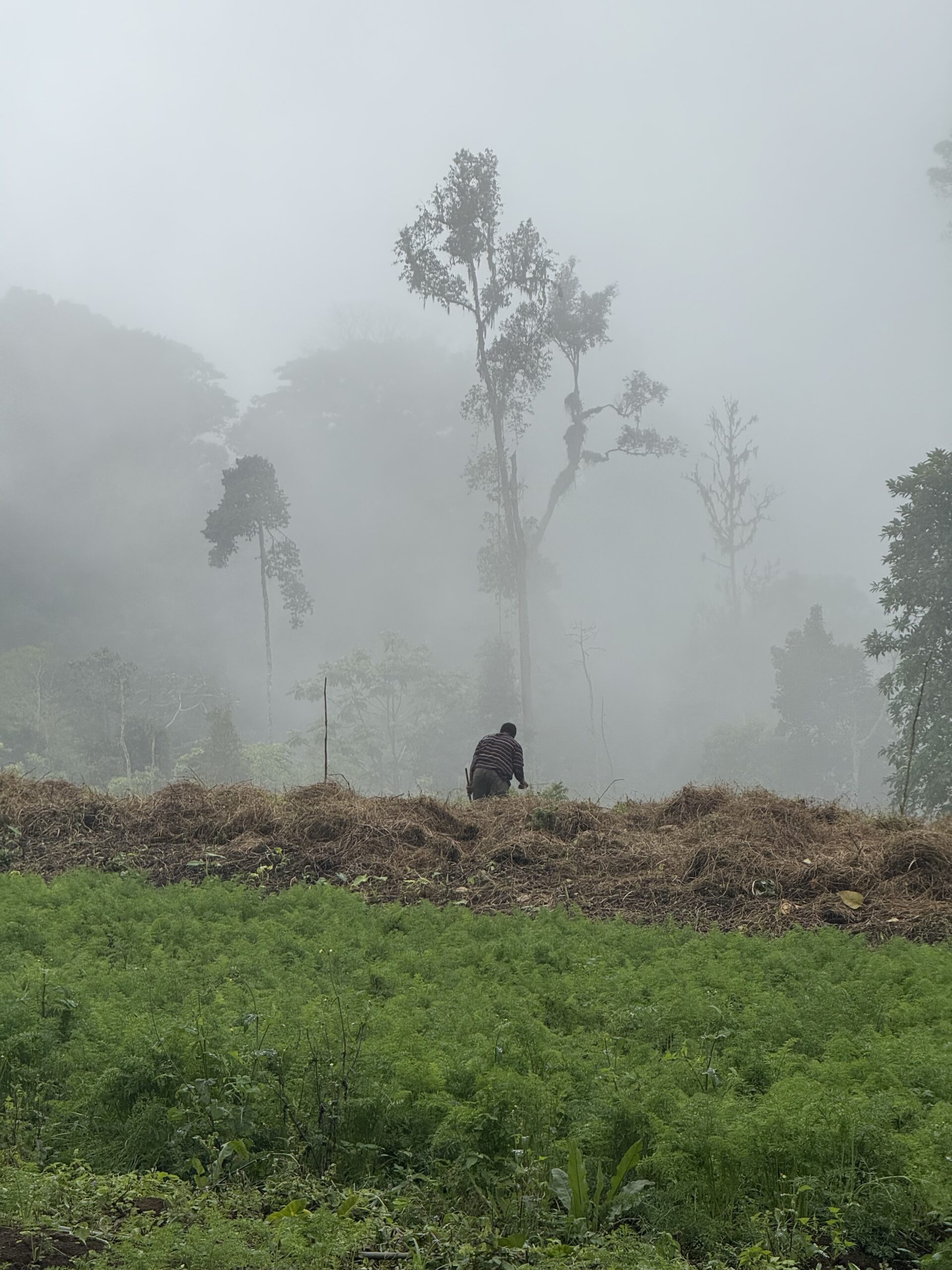
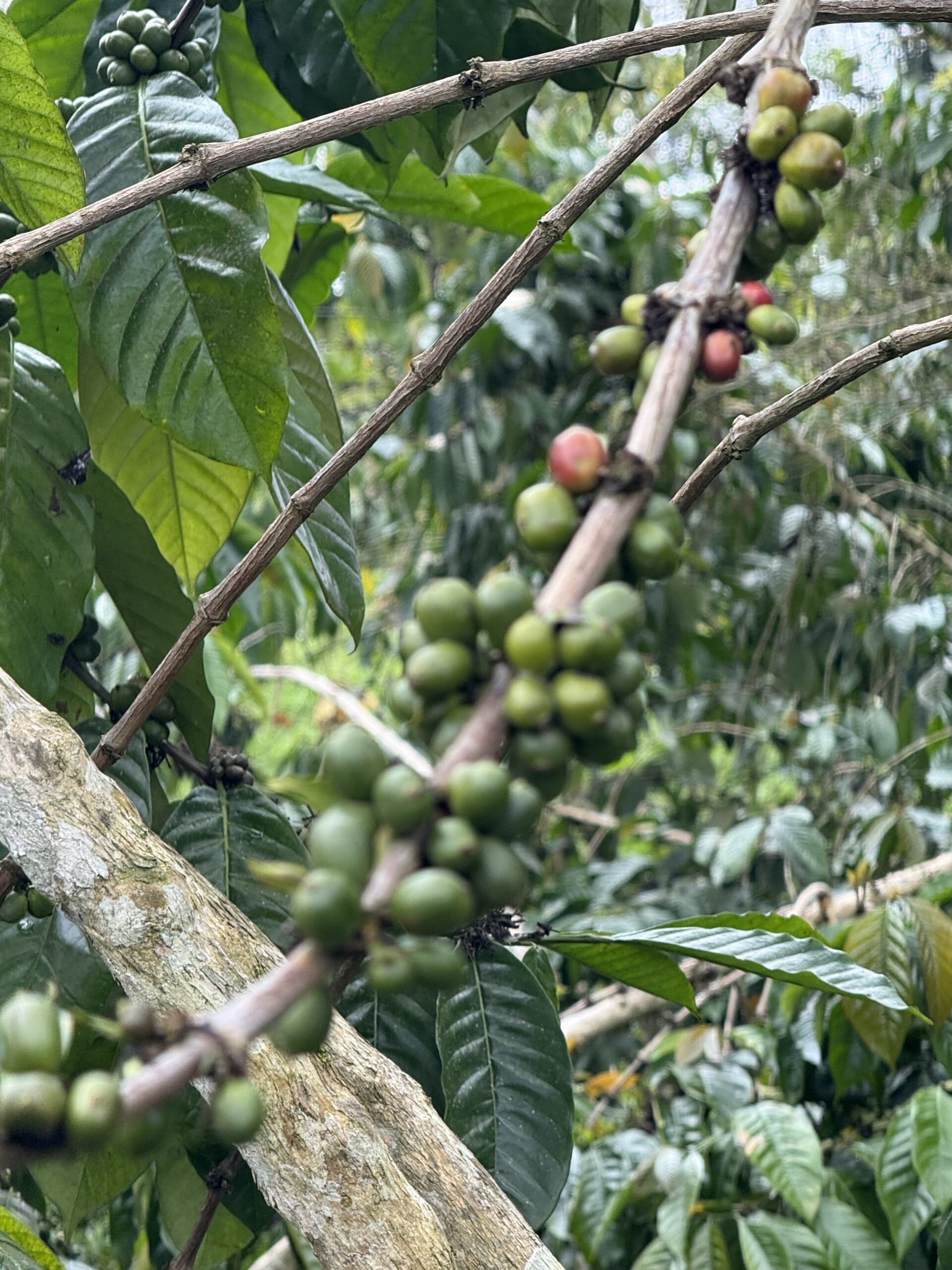
At first, the landscape remains partially open. You can still sense the agricultural land behind you, still see traces of cultivation at the edges. My guide, a local farmer as much as a guide, begins to point things out with quiet familiarity. Coffee plants growing along the path. Fruits you would pass without noticing. Leaves with purpose, not just presence.
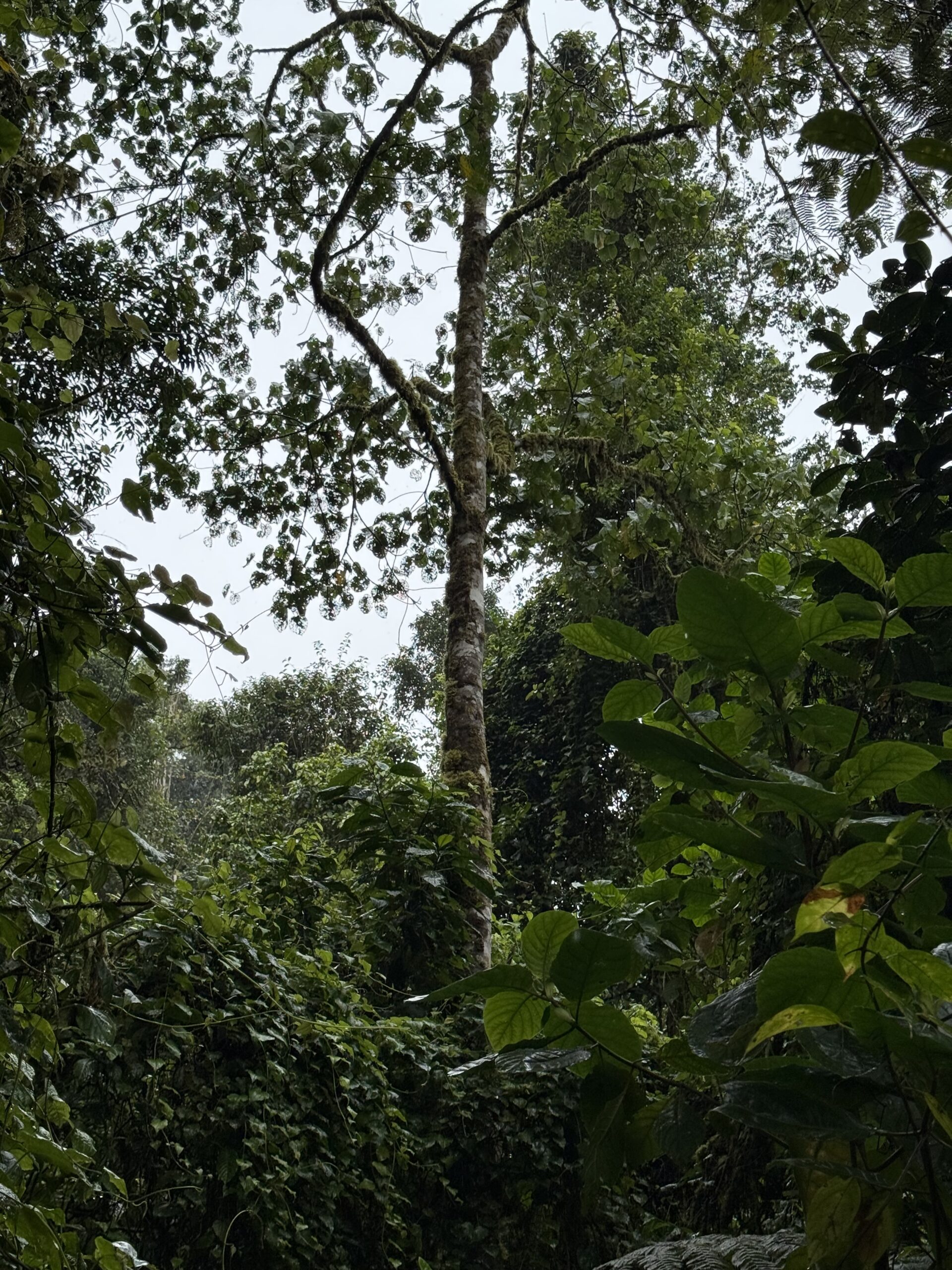
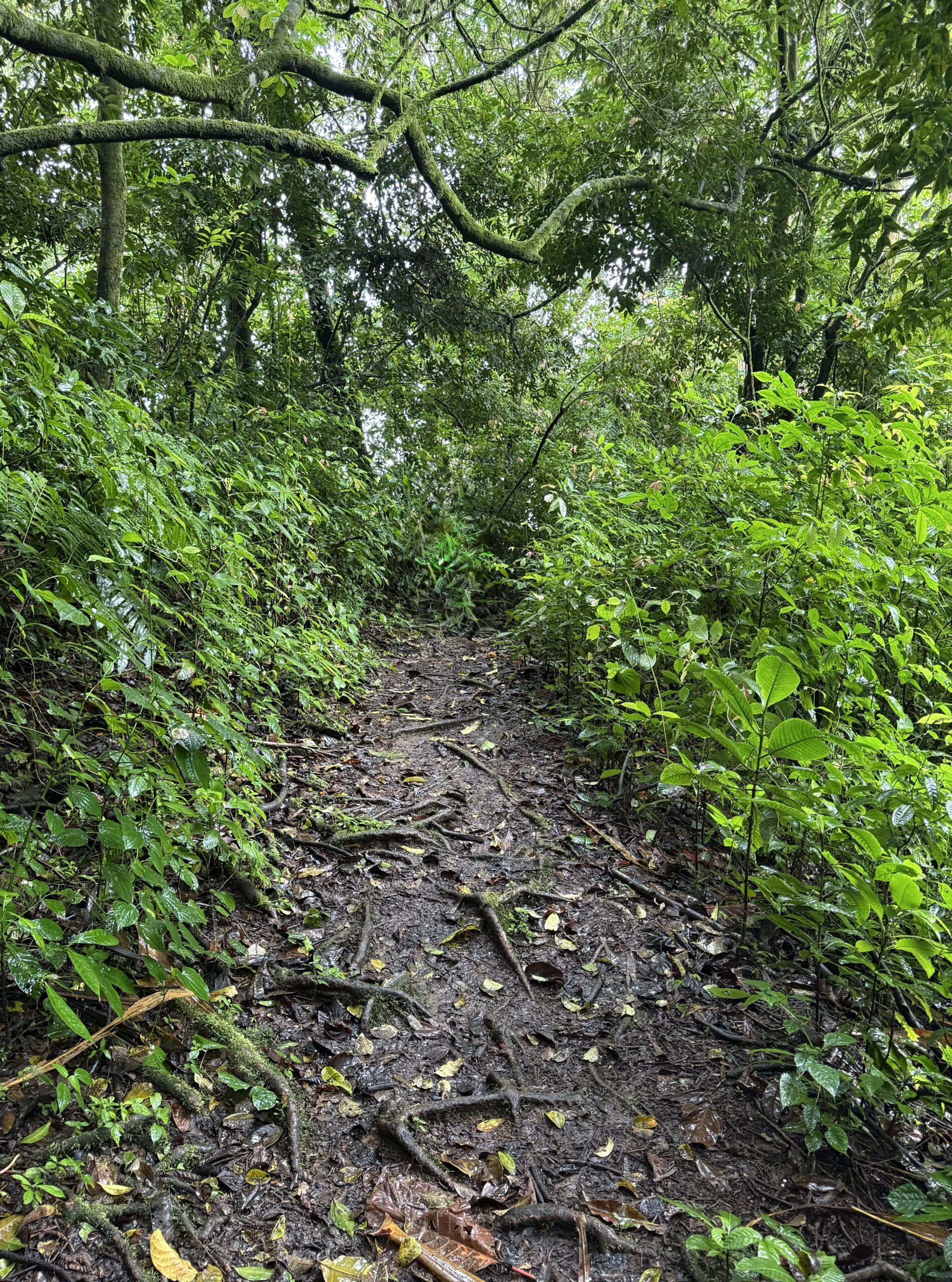
Soon, the rainforest closes in. It does not happen all at once. It gathers around you. The path narrows. The canopy thickens. Light filters through in fragments rather than beams. The air feels heavier, richer, filled with moisture and something deeper, almost mineral.
Very soon everything becomes green. Not just in colour, but in density, texture, and variation. Layers of growth competing for space and light, yet existing in a kind of equilibrium. The ground underfoot shifts with it. Damp, softened, occasionally unstable. You begin to notice your footing more carefully. Each step becomes deliberate.
About an hour into the hike, the drizzle begins. At first, it is barely perceptible, a fine mist settling across your skin. Then it deepens. Not into a storm, but into something steady and persistent. Enough to soak the surface of the trail. Enough to remind you exactly where you are.
Hiking Through São Tomé‘s Equatorial Rainforest
This is the equatorial line. Rain is not an interruption here. It is part of the rhythm.
At points, it comes down heavily, brief but intense, before returning to a softer presence. The forest absorbs it effortlessly. There is no disruption, no urgency. Only continuity. The deeper you go, the more enclosed it feels. Even in daylight, there are moments where the canopy blocks enough light to create a sense of dimness, not darkness, but a softened version of day. It is not disorienting, but it does ask something of you. Attention. Awareness.
You stop occasionally. Partly to catch your breath, partly because the environment demands it. There is a physicality to the climb that builds quietly. It is not fully overwhelming, but it is constant.
The sounds around you remain subtle:
- Birds moving somewhere above the canopy
- The occasional rustle of unseen movement
- The steady rhythm of your own footsteps
There is no crowd. No passing groups. No markers of tourism. Just you, your guide, and the forest. Experiences like this sit at the core of how I approach travel, stepping beyond the surface and into places that require a little more of me.
What The Lagoa Amélia Hike Is Really Like
The climb continues steadily upward. It is not steep enough to intimidate, but it does not relent. Over time, the effort accumulates. You begin to feel it in your legs, in your breath. The humidity adds to it. The air thick enough to remind you that this is not a casual walk. This is a hike that asks for energy, for presence, for a certain level of readiness.
A light breakfast proves to have been the right choice. Anything heavier would have slowed the body unnecessarily. Still, by the halfway point, you feel the need for fuel. Something small. Something sustaining. The raincoat becomes less about comfort and more about necessity. The damp settles into everything, clothing, skin, the path itself and yet, there is no sense of discomfort that overrides the experience. It is simply part of it. You are in the rainforest. Fully.
Reaching The Lagoa Amélia Volcanic Crater
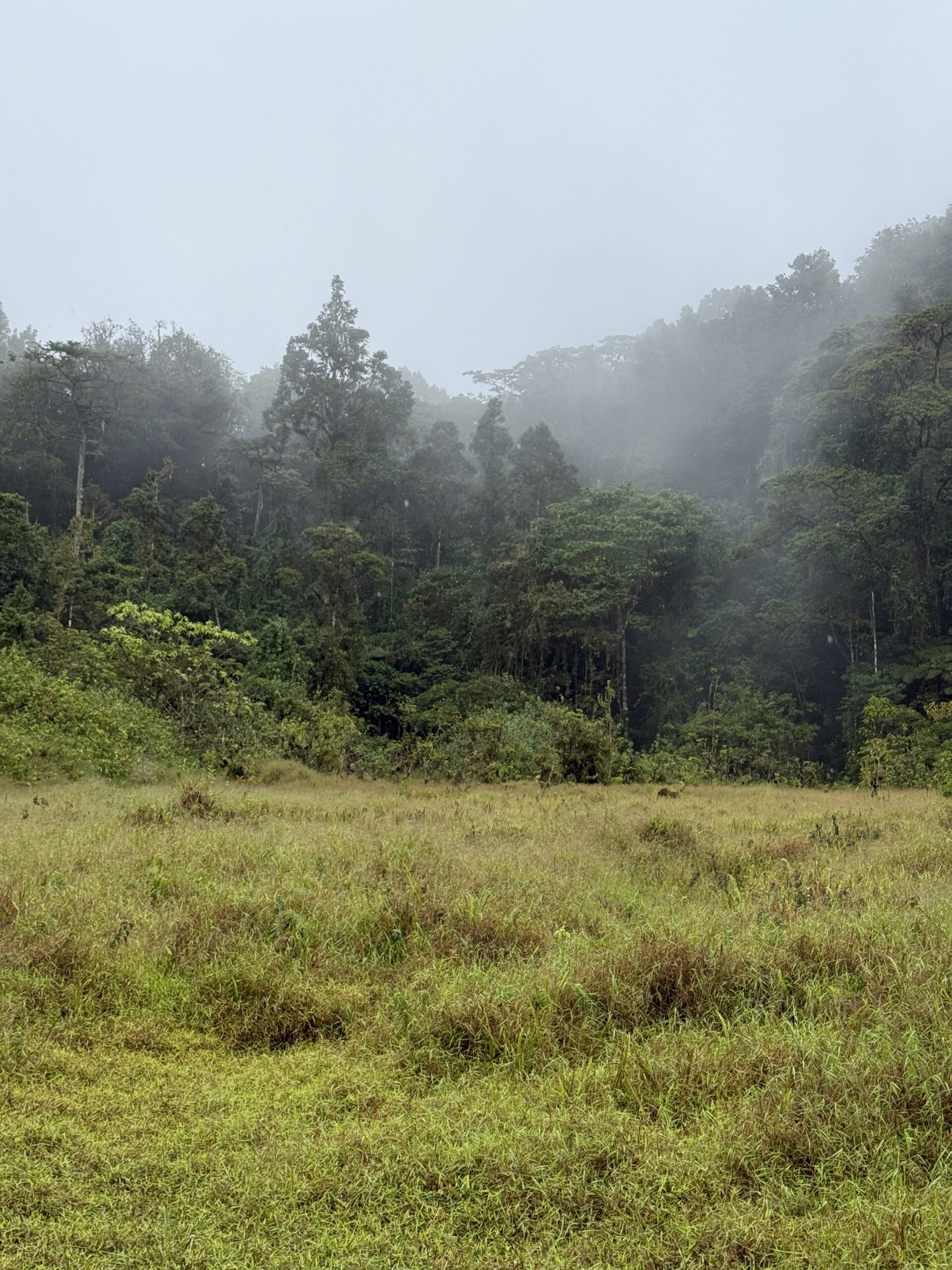
After roughly two hours, there is a slight descent. The forest begins to open, not dramatically, but enough to signal that something is changing.The path levels. And then, almost without announcement, you arrive.Lagoa Amélia is not what you expect if you are thinking in traditional terms of a lake.
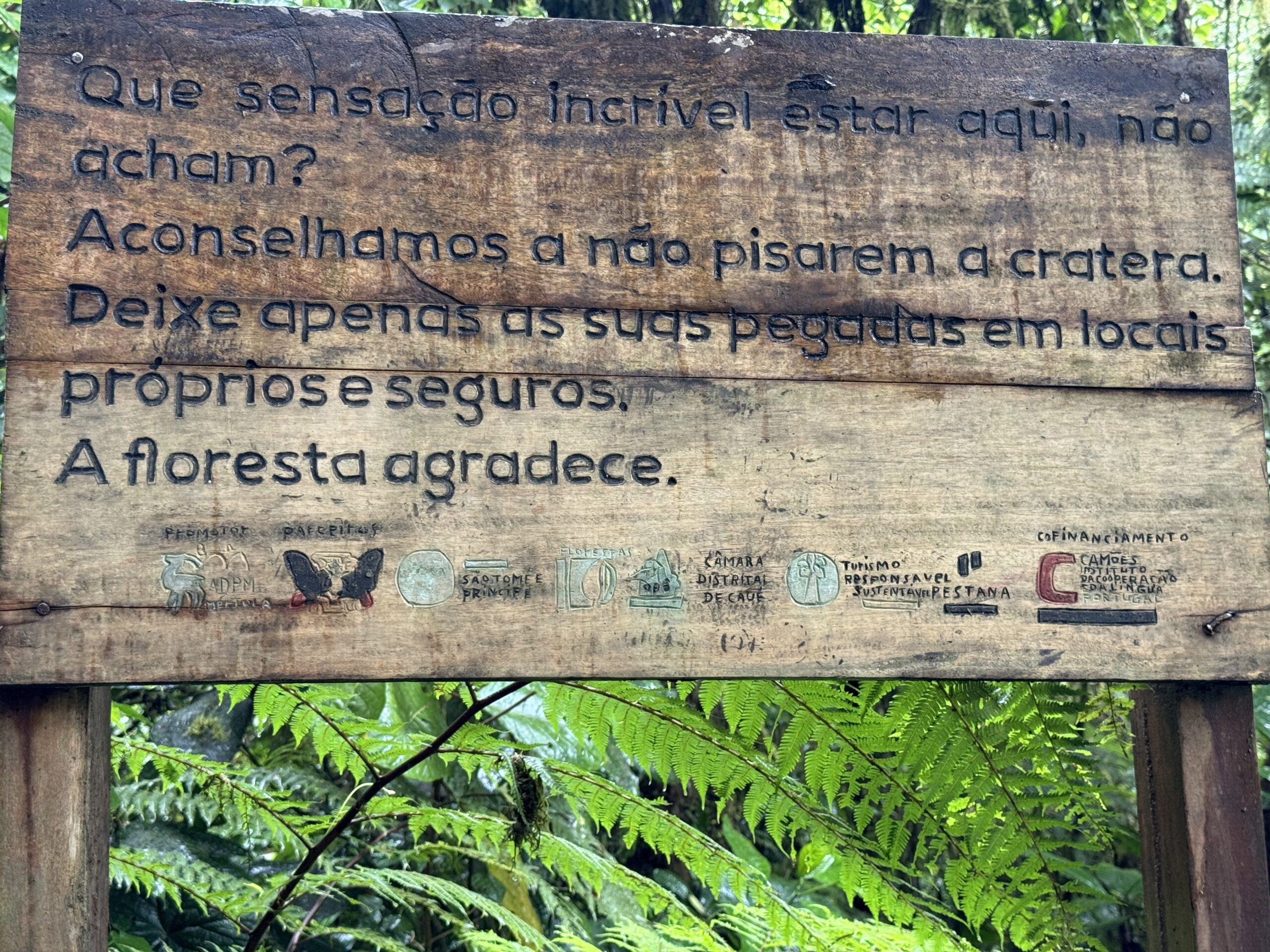
There is no visible body of water. Instead, what unfolds in front of you is a wide, open crater, the remains of an extinct volcano. A depression in the earth where water once gathered, where the landscape still holds the memory of it, even if it is no longer visible on the surface. There is a sign marking the location, simple, factual. It tells you where you are, but it does not attempt to interpret it for you.
The ground inside the crater is unlike anything you have stepped on before. Soft. Sponge like. Almost hollow beneath your feet.
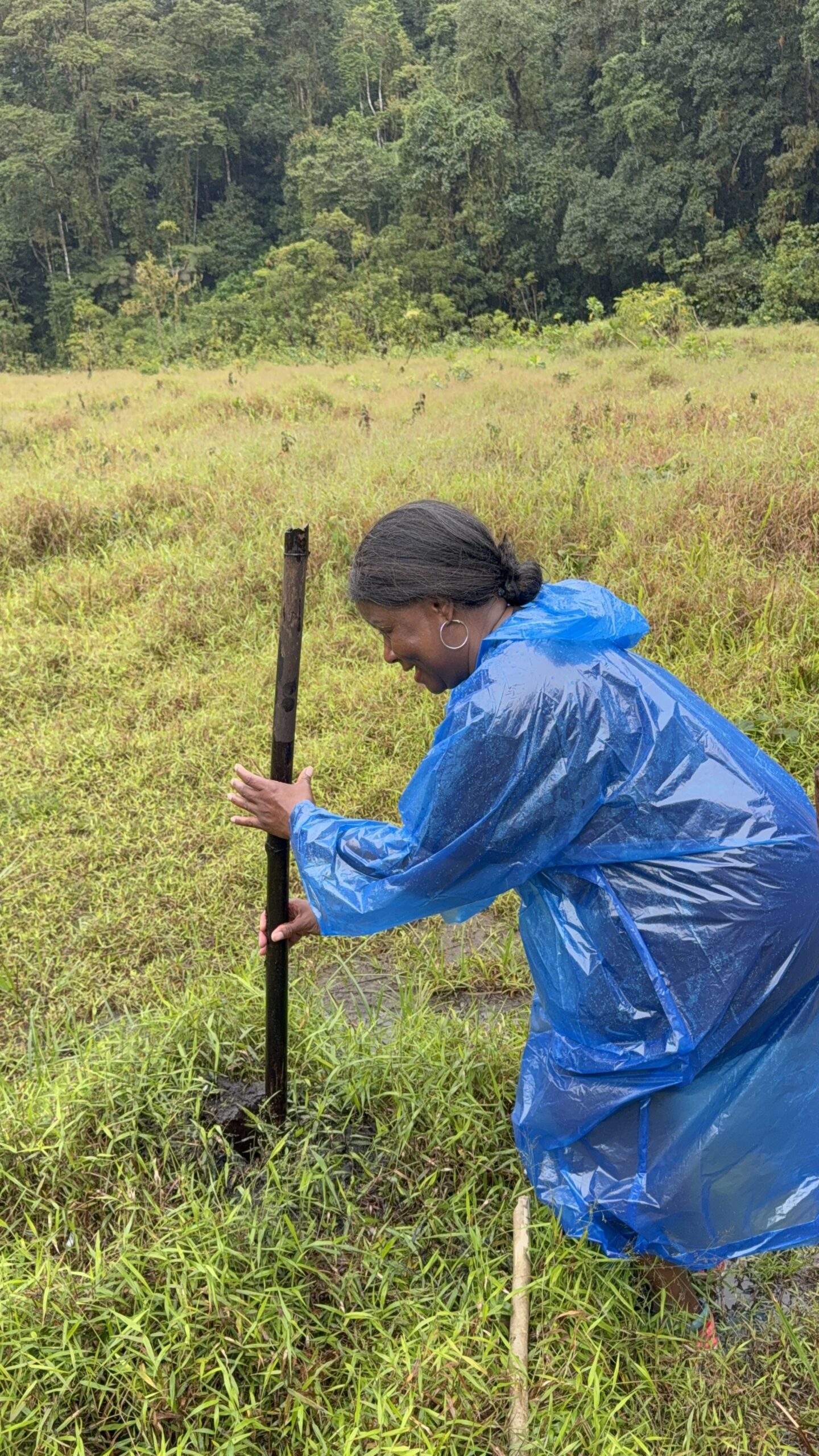
At one point, using a walking stick nearly two metres long, I pressed it into the earth. It sank effortlessly, far deeper than expected, disappearing almost entirely, if it were a longer stick it would have just kept going. My guide hovered nearby, visibly cautious.
When I withdrew the stick from this bottomless pit, it was coated in dark, tar, volcanic soil. There is a local story attached to Lagoa Amélia. A French tourist is said to have disappeared here, swallowed by the unstable terrain. Whether fact or folklore, it feels plausible in this setting. The ground does not behave as expected. It shifts. It absorbs, and it holds. This is not a viewpoint designed for photographs. It is not framed or elevated for effect.
It is quieter than that. More geological. More grounded in the reality of the land. The danger is not immediately visible, which makes the crater feel even more deceptive. The phrase “looks are deceiving” comes to mind. In the crater, follow your guides instructions, your life may depend on it.
Descending Through Obô Natural Park
The way down carries a different rhythm.
Gravity assists, but the terrain demands attention. The damp ground becomes more noticeable on descent. Footing matters more. Balance becomes key. I did have a heavy slip was not pleasant. No harm done though.
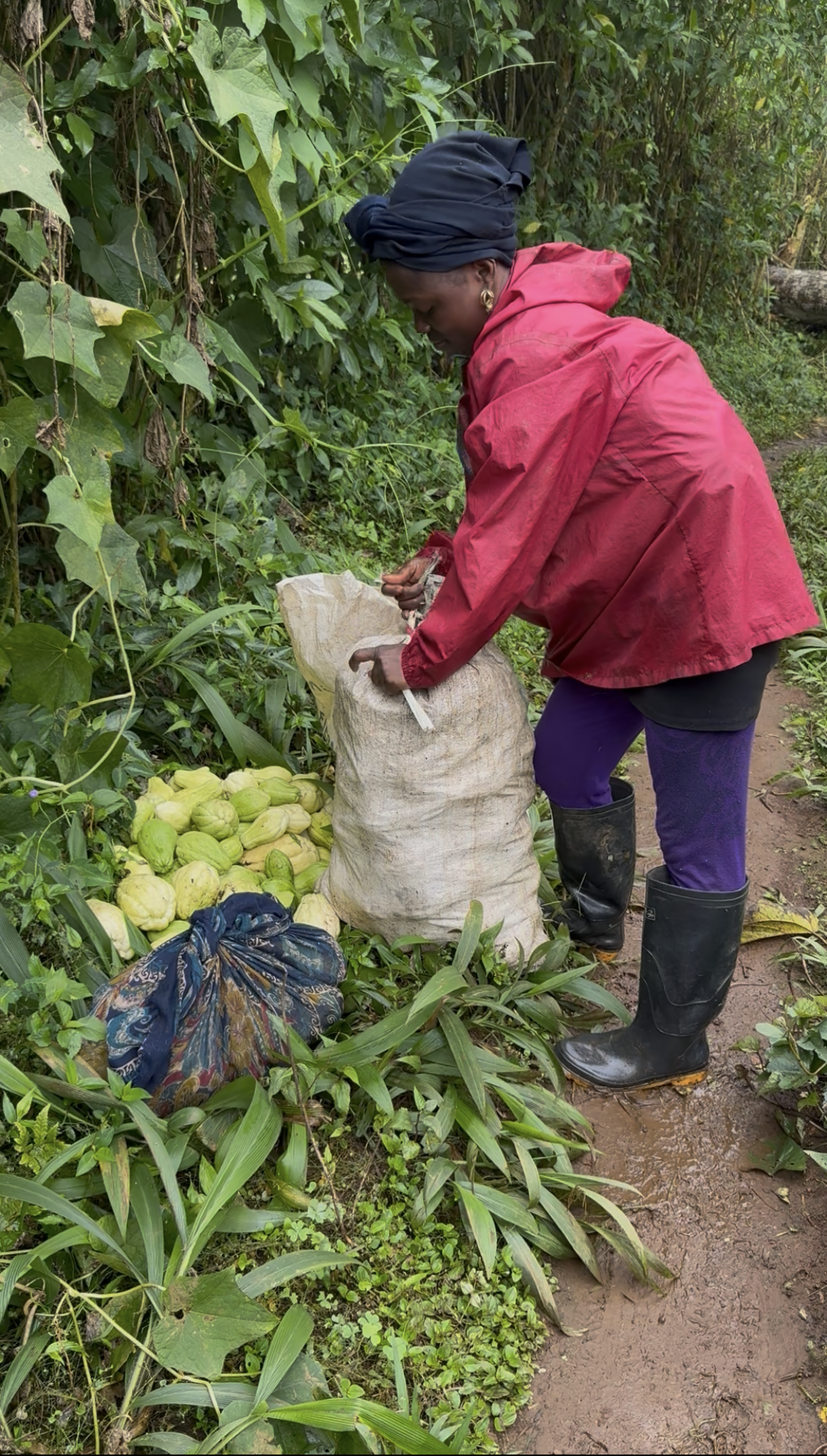
Along the way, the human element returns in unexpected ways. A woman appears on the trail, packing up her vegetables, just reaped. She carries at least three sacks of vegetables on her back, heavy, easily 40 to 50 pounds. She moves with a steadiness that contrasts sharply with my own careful steps. My guide stops to help her, adjusting the load, securing it properly. There is no hesitation. No conversation beyond what is necessary. She continues and within moments, she is gone. Absorbed back into the forest. We never caught up to her again, because of my pace.
It is a brief interaction, but it stays with you. A reminder that this landscape is not just something to be explored. It is lived in. Worked. Navigated daily in ways far more demanding than a single hike. Further down, the guide points out coffee growing along the path, small, unassuming plants that carry the weight of the island’s history.
Lunch At Restaurante Almada Negreiros
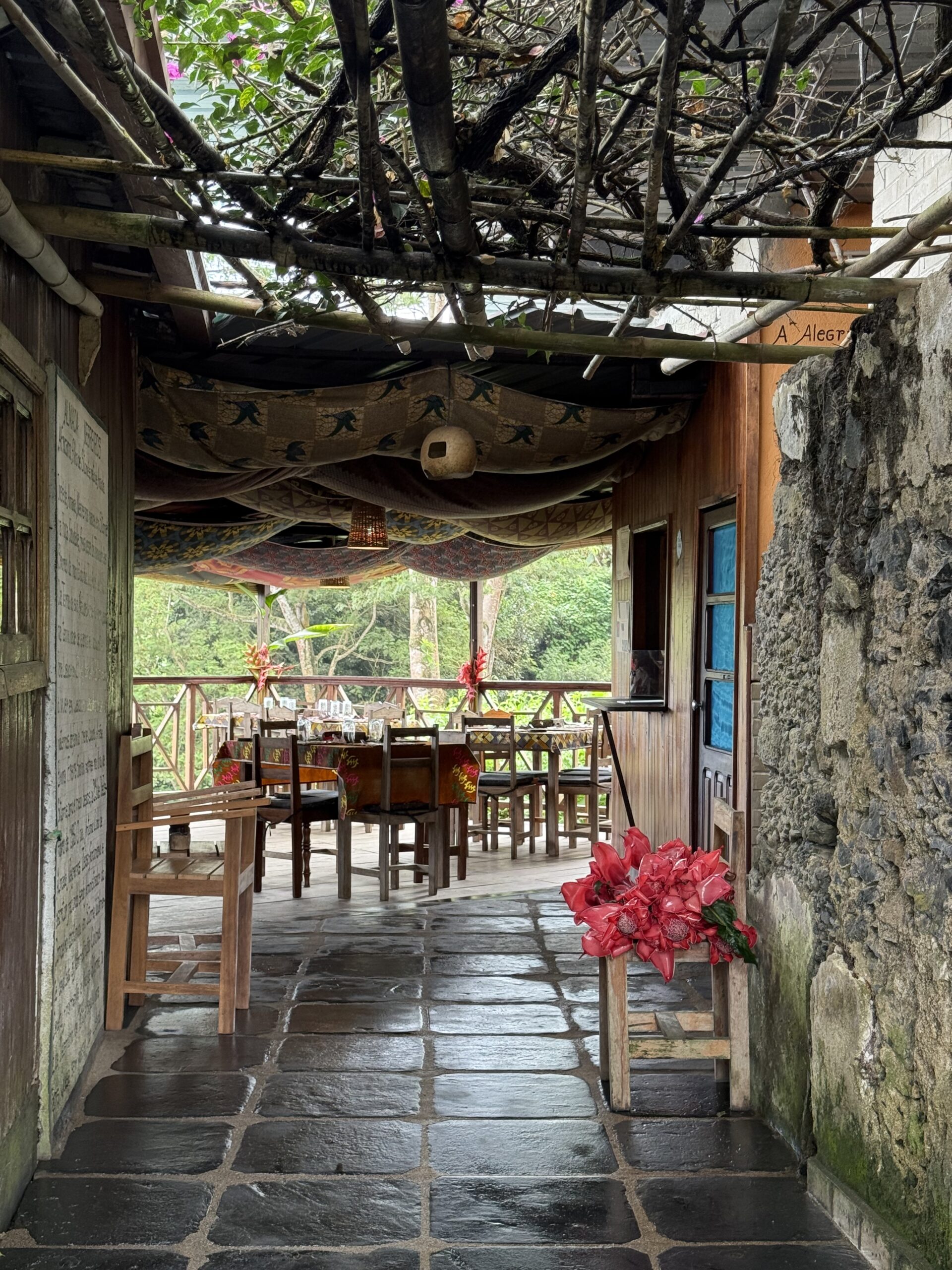
The hike concludes where it began, but the day does not end there. A short drive brings you to Restaurante Almada Negreiros. Set into the landscape rather than placed upon it. The restaurant sits elevated, surrounded by forest. It does not compete with its surroundings. It blends into them. The view stretches outward, framed by green.
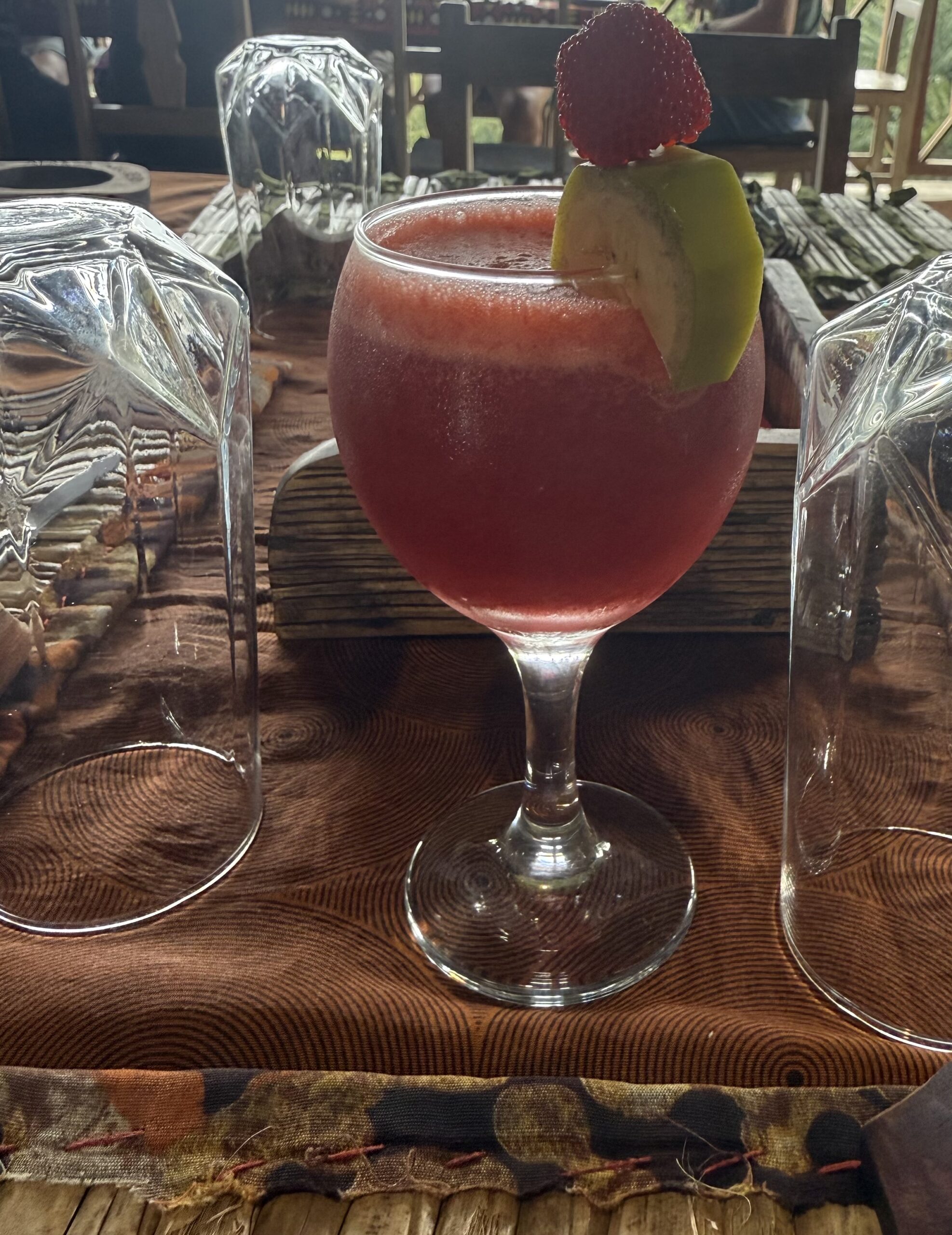
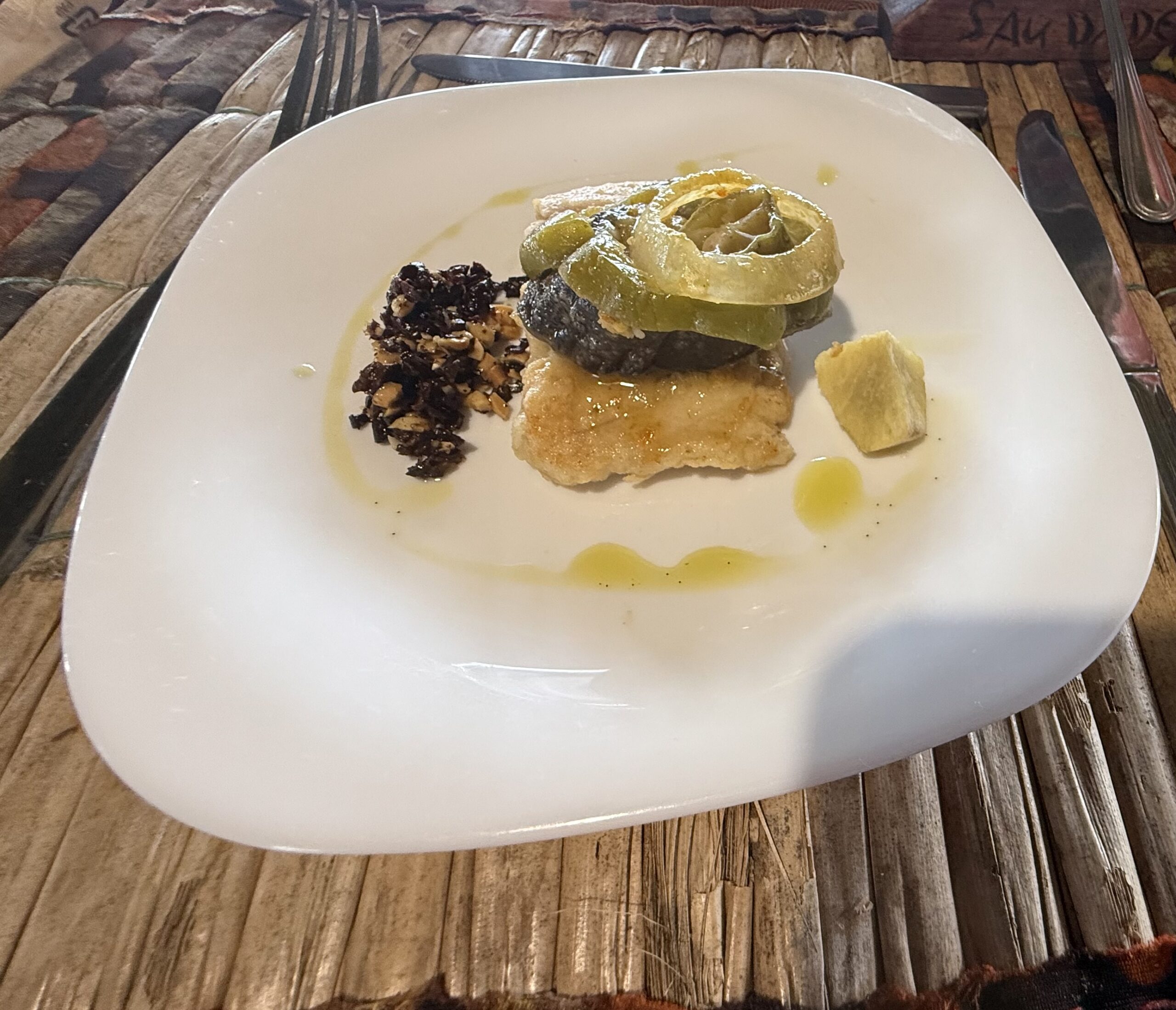
Lunch is simple but thoughtful. Local cuisine, prepared without excess. A fresh fruit juice, deep in colour, almost cranberry-like in its richness. Starters that lean into local ingredients, including dishes that require a certain openness to try. The setting carries as much of the experience as the food itself. After hours in the rainforest, sitting down to lunch here feels earned.
Visiting São Nicolau Waterfall
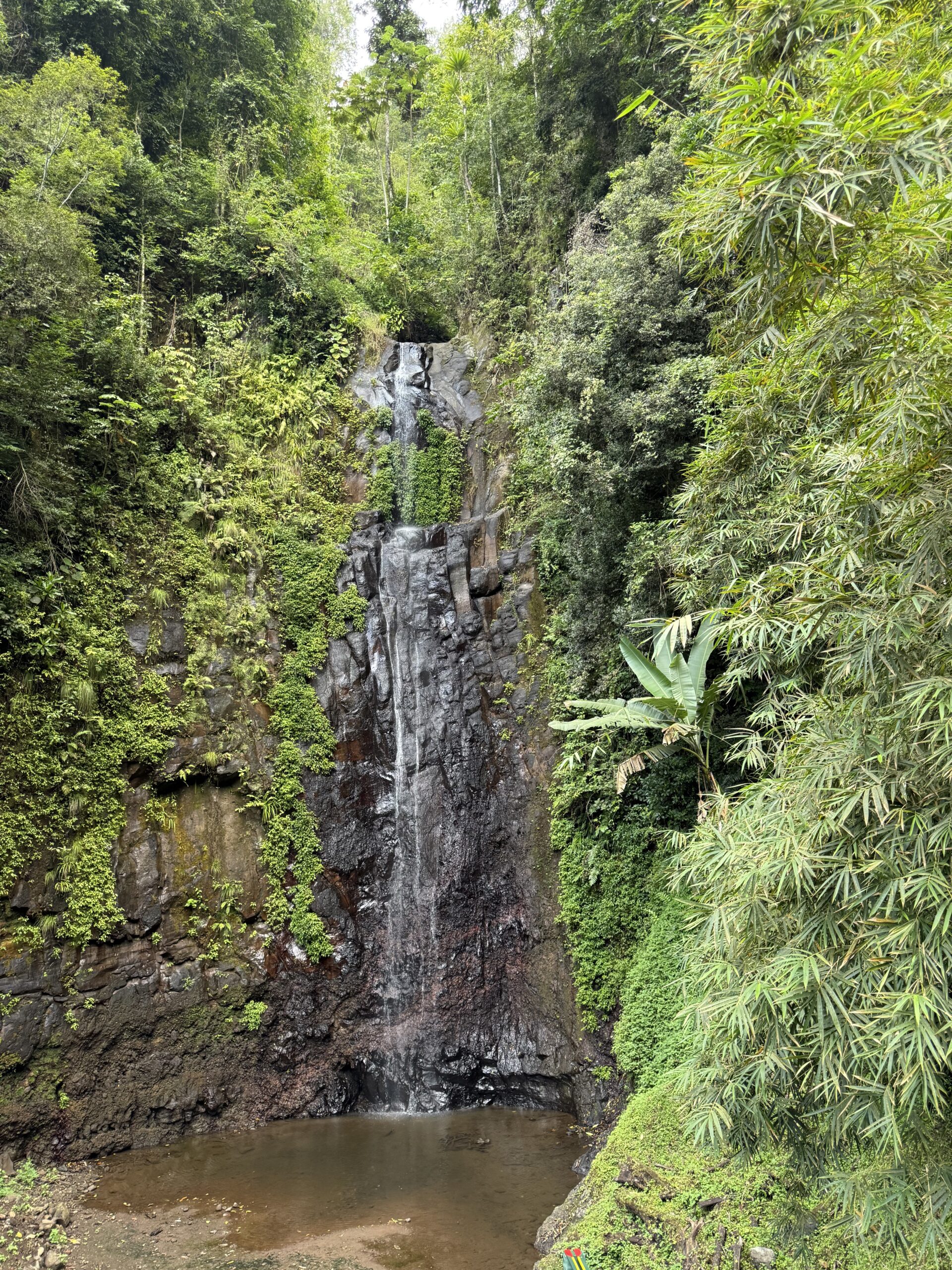
From there, the day continues with a stop at São Nicolau Waterfall. São Nicolau Waterfall drops roughly 60–80 metres in a single, narrow fall, cutting cleanly through the dense rainforest just off the roadside. At this time of year, the flow is lighter, the rainy season only just beginning to build. The structure of the waterfall remains striking. Tall, vertical, framed by dense vegetation. It does not need volume to hold presence.
It is enough to stand there, to take in the contrast, the movement of water against the stillness of the surrounding forest. Here the landscape reduces itself to two dominant colours are green dense vegetation and the dark volcanic soil, deep brown with almost maroon undertones. If you’re exploring further across the island, the experience shifts again at the equator on Ilhéu das Rolas, a different landscape, but one that carries the same sense of distance from the surface.
Monte Café Plantation & Museum
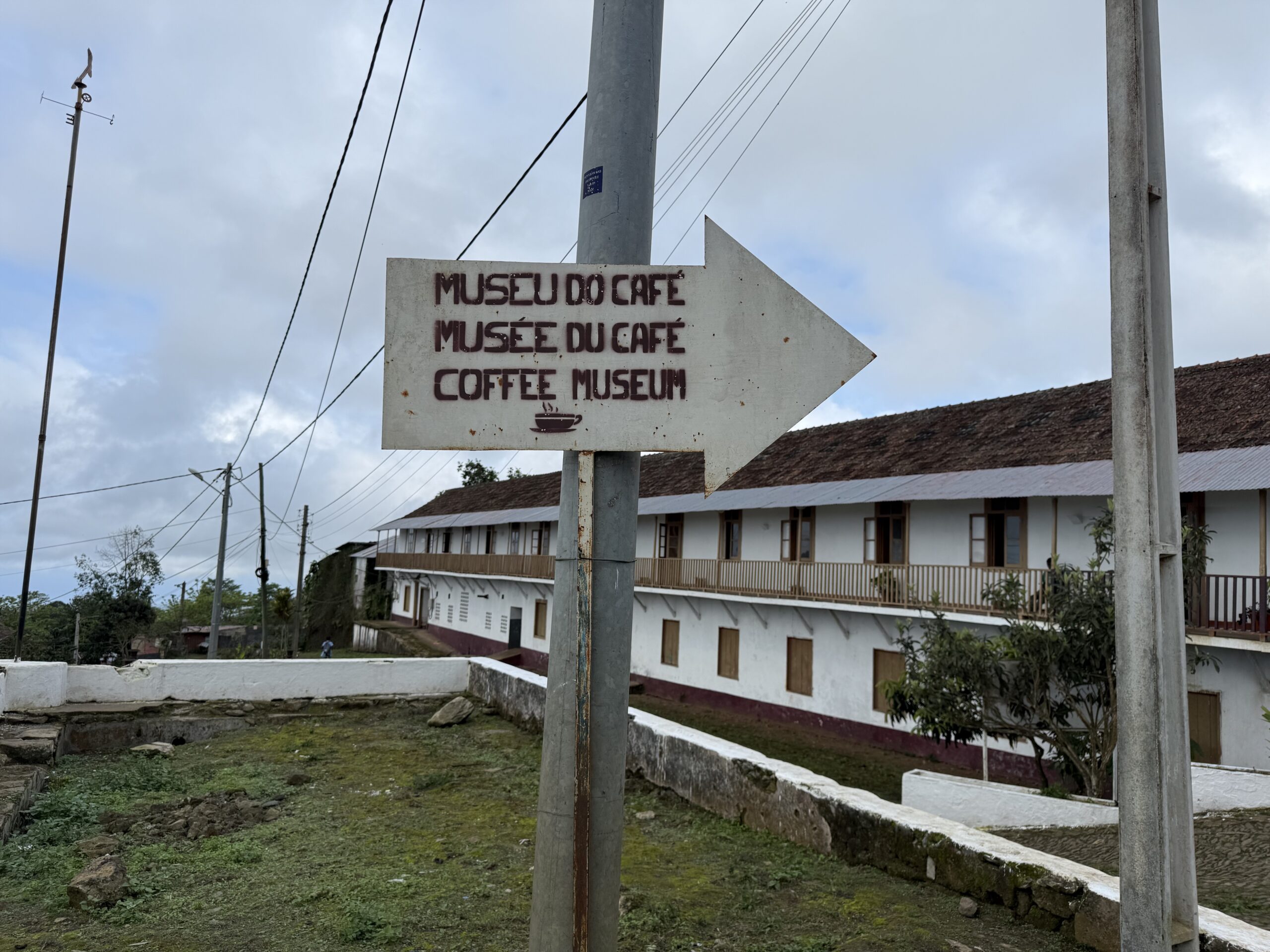
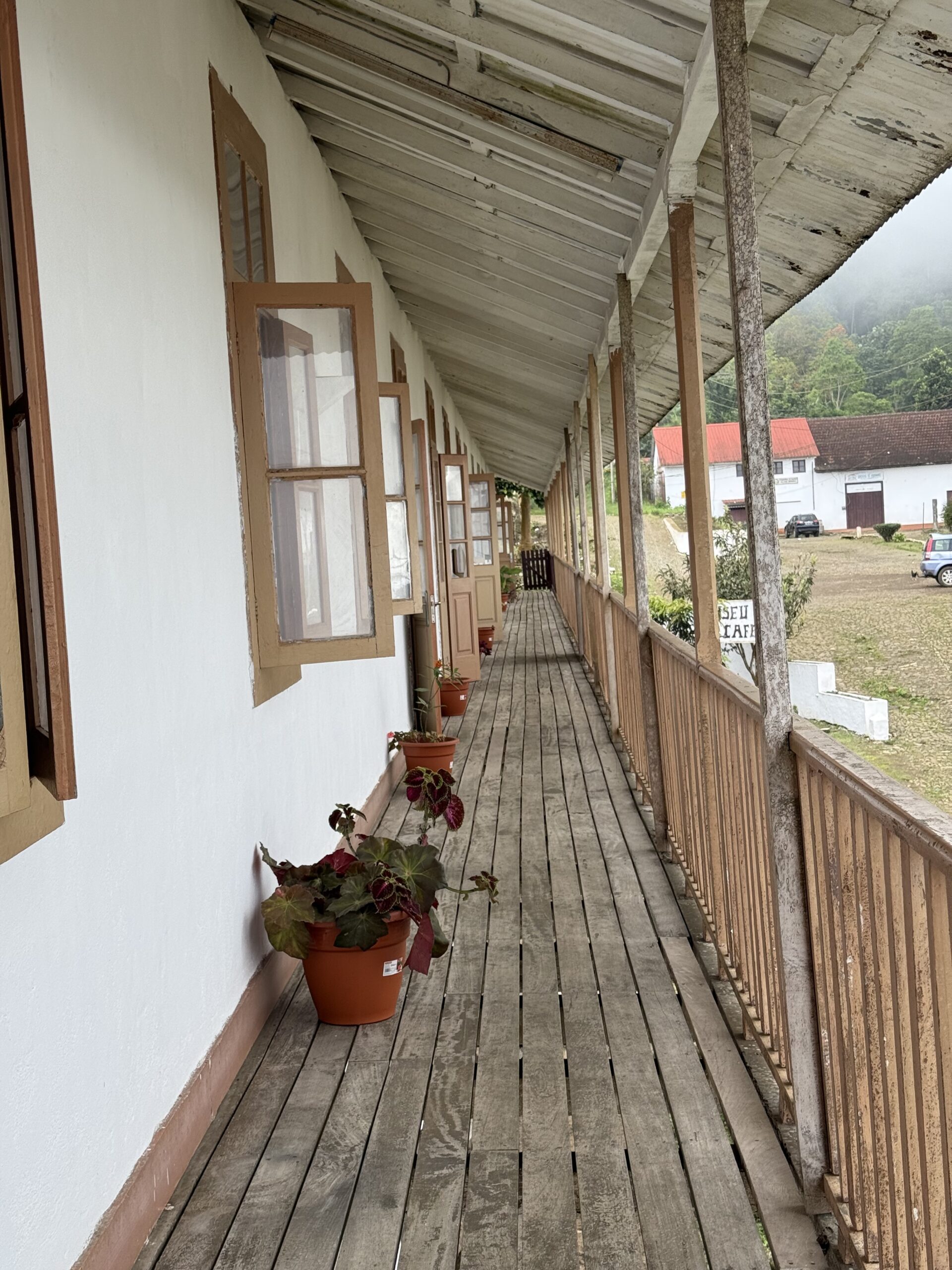
The final layer of the day brings you to Monte Café Plantation. Here, the narrative shifts from landscape to history. The buildings once served as part of the island’s coffee production system. Spaces where beans were processed, sorted, prepared for export. Today, the buildings serve a different purpose. Parts of the plantation have been preserved as a museum, while others continue to function as community spaces and schools. The structure of the estate remains intact enough to understand how life once operated here, from the overseer’s houses to the worker quarters and processing areas that supported São Tomé’s coffee trade.
The division of space. The remnants of colonial systems that shaped the island’s economy and society. A guide walks you through the story of the museum it, pointing out the overseer’s houses, the worker quarters, the spaces where labour was once concentrated. It is not presented with embellishment. Just facts. Context. Continuity. You leave with coffee. A small, physical connection to what you have just learned.
Where Else On The Map
If you’re continuing across São Tomé, the experience shifts again at the equator on Ilhéu das Rolas, a different landscape, but one that carries the same sense of distance from the surface as the Lagoa Amélia hike in São Tomé. Further afield, the Lost Waterfalls hike in Boquete – Panama offers a similarly immersive path through dense terrain, a different setting, but a comparable sense of stepping away from the surface.
Travel Deeper
Some places ask very little of you. This is not one of them. The Lagoa Amélia hike in São Tomé begins quietly, with the drive into the interior and the gradual unfolding of the day. It requires time, effort, and a willingness to engage beyond the surface. In return, it offers something far less common. Not just a view. Not just a moment. But a clearer sense of where you are, geographically, historically, and physically. It is not about spectacle and check list. It is about presence.
Practical Notes
Entry requirements and regulations for São Tomé and Príncipe are subject to change. Always confirm the latest visa and travel guidance with official sources before departure.
Conditions on the Lagoa Amélia hike can vary depending on weather and season, so it’s worth checking local guidance ahead of time.
Travel safely, and return not just with memories, but with connections that endure.